
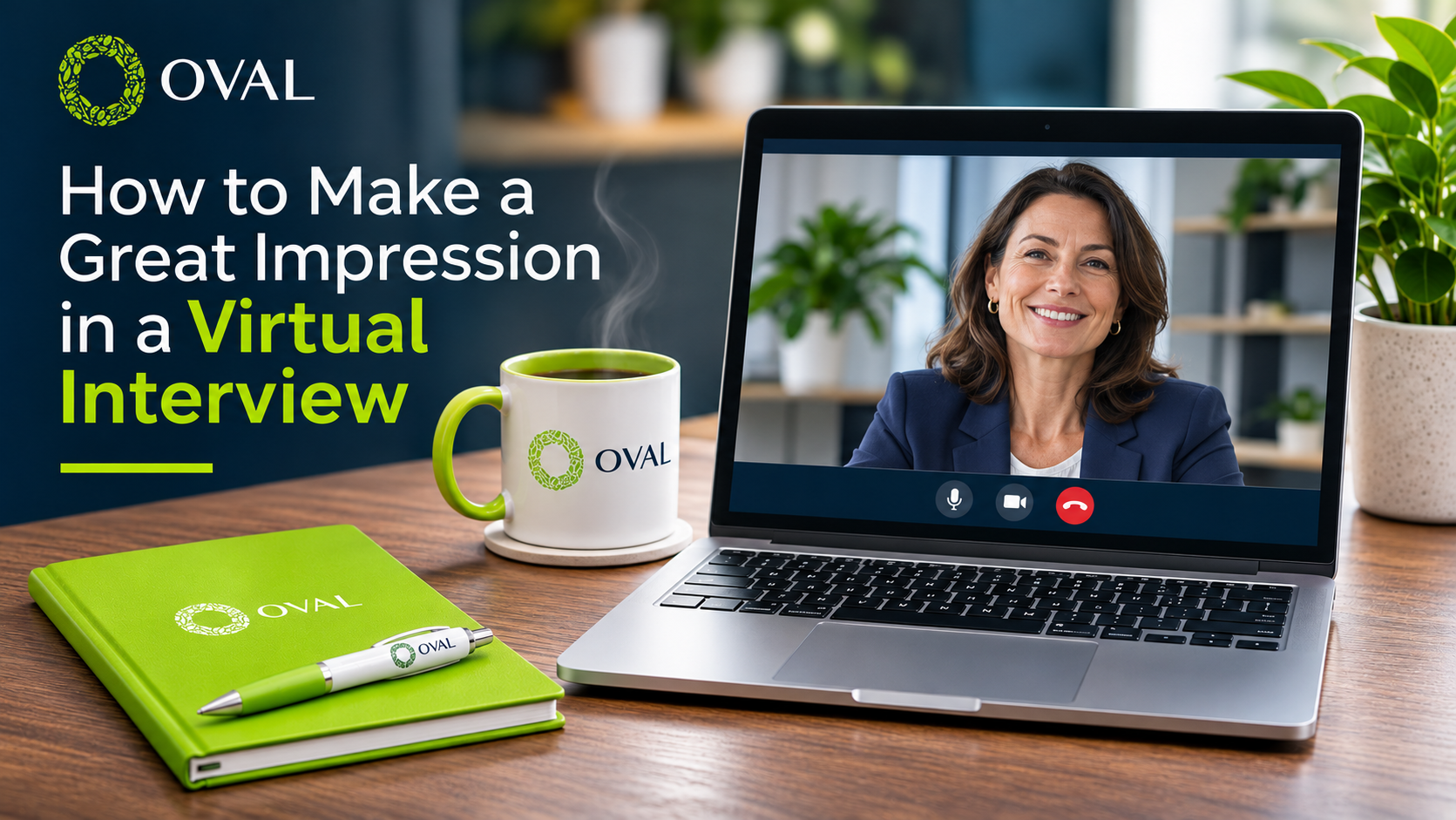
Practical advice to help you prepare, build confidence and perform at your best in your next online interview.
Virtual interviews have become a familiar part of the recruitment process. Whether you're interviewing for a senior leadership position or taking the next step in your career, there's a good chance you'll meet your prospective employer on Microsoft Teams, Zoom or another video platform before meeting them in person.
While interviewing from home might feel more relaxed, the expectations are no different from a face-to-face meeting. Employers still want to understand your experience, assess your suitability for the role and get a sense of how you communicate and build relationships.
The good news is that a little preparation can make a big difference.
Here are our tips for making the right impression.
1. Get the technology right before the interview
Few things disrupt your confidence quite like discovering your microphone isn't working just as an interview begins.
Take some time beforehand to check your internet connection, camera, microphone and speakers. Make sure you're familiar with the video platform and know how to join the meeting.
It's also worth having a backup plan. Keep your phone nearby and make sure you have the interviewer's contact details in case you experience any technical difficulties.
Aim to be ready at least 10 minutes before your interview, giving yourself time to settle and focus.
2. Think about your surroundings
Your interview environment can influence the impression you make.
Choose somewhere quiet, comfortable and free from distractions. A neutral, uncluttered background works best, and good lighting will help ensure you're clearly visible.
Position your camera at eye level and try to look towards it when speaking. This helps create a more natural connection with the interviewer.
And don't forget to silence your phone and computer notifications. You want the conversation to have your full attention.
3. Dress appropriately
Just because you're interviewing from home doesn't mean you should approach it any differently from an in-person meeting.
Consider the organisation, its culture and the seniority of the position, and dress accordingly.
You don't necessarily need to wear a suit, but your appearance should reflect the professional impression you want to make.
Getting dressed for an interview can also help you get into the right mindset.
4. Prepare examples, not scripted answers
Preparation is important, but there's a difference between being well prepared and sounding rehearsed.
Rather than trying to memorise answers to every possible interview question, think about the experiences and achievements that best demonstrate your suitability for the role.
For senior and management positions, employers are particularly interested in understanding the impact you've made.
Consider examples of where you've:
Led a team through change or uncertainty.
Improved business performance or operational efficiency.
Delivered measurable commercial results.
Overcome a significant challenge.
Developed people or strengthened a leadership team.
The STAR method (Situation, Task, Action and Result) can help you structure your examples clearly.
Most importantly, focus on what you personally contributed and the difference it made.
5. Do your research
A strong interview is a two-way conversation, and preparation goes beyond understanding the job description.
Take time to research the business, its products or services, its market position and any recent developments.
If you know who will be interviewing you, look at their professional backgrounds and responsibilities.
For leadership appointments, think about the challenges the organisation may be facing and how your experience could help address them.
This will enable you to have a more meaningful conversation and demonstrate genuine interest in the opportunity.
6. Be conscious of how you communicate
Communicating through a screen can feel different from sitting across a table.
Small delays can make conversations less natural, so allow the interviewer to finish speaking before responding and avoid rushing to fill every silence.
Try to maintain good eye contact, listen carefully and show that you're engaged.
It's perfectly acceptable to have a few notes nearby, along with your CV and the job description, but avoid reading directly from them.
The aim is to have a professional, natural conversation, not deliver a presentation and if something unexpected happens, whether it's a connection issue or an interruption, deal with it calmly and move on. How you respond to an unexpected situation can say something positive about your ability to remain composed under pressure.
7. Ask questions that matter
An interview isn't just about demonstrating why you're right for the role. It's also your opportunity to decide whether the organisation and position are right for you.
Prepare a few thoughtful questions that go beyond information readily available on the company website.
For example:
What are the biggest priorities for the person taking on this role?
What challenges will they need to address in the first six to twelve months?
How would you define success in this position?
How would you describe the leadership culture within the business?
Good questions demonstrate commercial awareness, curiosity and an interest in making a meaningful contribution.
They can also help you understand whether the opportunity aligns with your own ambitions and values.
8. Finish on a positive note
As the interview draws to a close, take the opportunity to reinforce your interest in the role and briefly highlight why you believe your experience is relevant.
If the conversation has strengthened your enthusiasm for the opportunity, say so.
You may also want to follow up with a short thank-you email, particularly if there was something specific discussed that you'd like to acknowledge.
A thoughtful follow-up can help reinforce the positive impression you've made.
Preparation makes the difference
Ultimately, a successful virtual interview comes down to many of the same things as a face-to-face meeting: preparation, confidence, clear communication and the ability to demonstrate the value you can bring to a business.
The technology is simply the way the conversation takes place.
At Oval, we understand how important the interview process is, particularly when considering a significant career move. We work closely with candidates throughout the recruitment journey, helping them prepare for interviews and make informed decisions about their next opportunity.
If considering your next career move, whether you're actively exploring opportunities or simply thinking about what might come next, our team would be happy to have a confidential conversation about your career aspirations. Get in touch with the Oval team to find out how we can help.

